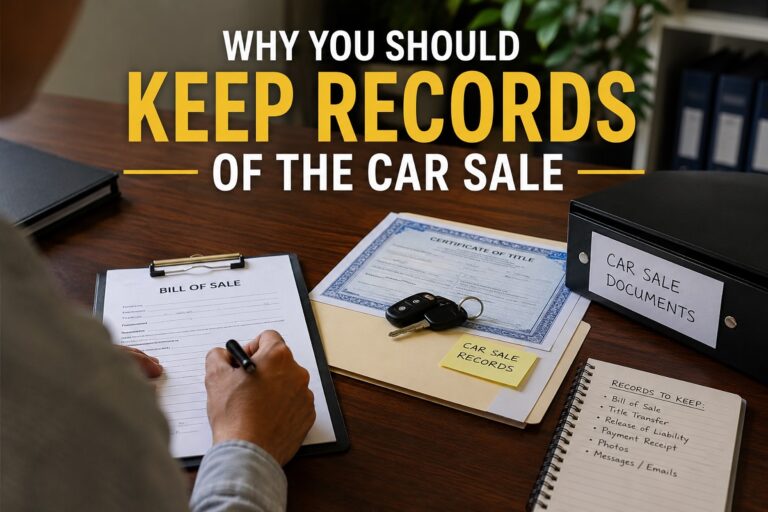
Keeping records of the car sale is one of the most important steps after transferring ownership of a vehicle. Many buyers and sellers focus on the payment and title transfer, but proper documentation can protect both parties from legal disputes, tax issues, registration problems, and unexpected liabilities long after the transaction is complete.
Whether you are selling a used car privately, trading in a vehicle, or purchasing a car from an individual seller, maintaining organized car sale records creates proof of the transaction and helps prevent future complications. Proper vehicle sale documentation also makes it easier to resolve ownership questions, insurance claims, and DMV concerns if they arise later.
Protect Yourself From Liability After the Sale
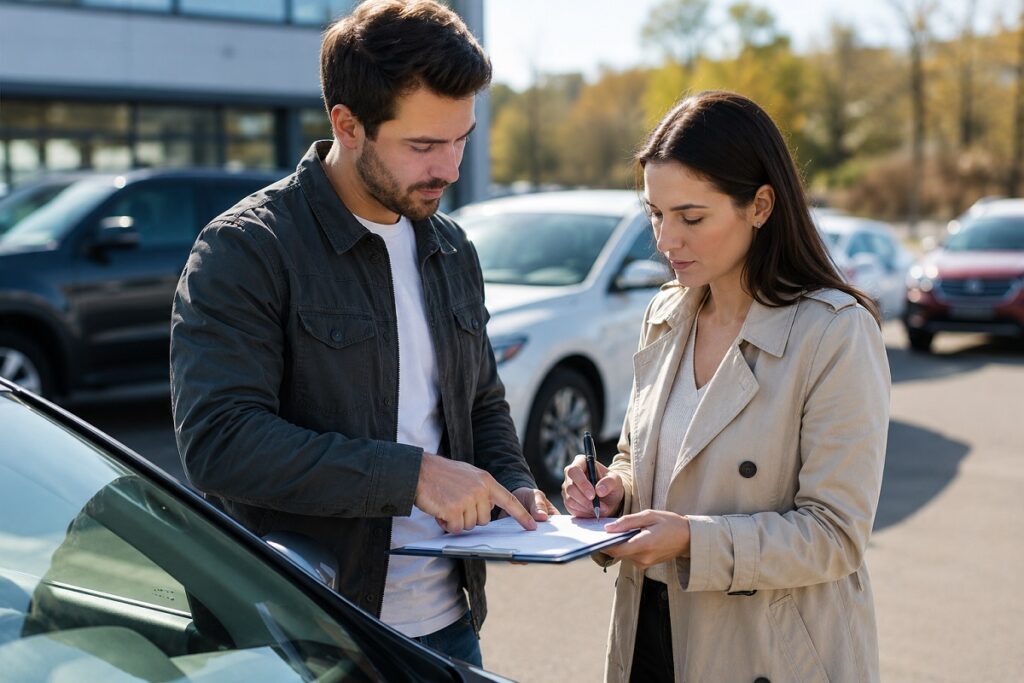
One of the biggest reasons to keep records of a car sale is liability protection. Once a vehicle leaves your possession, you want clear proof showing the exact date and terms of the transaction.
If the buyer delays registering the vehicle or gets into legal trouble before the ownership transfer is processed, your records may help prove that you were no longer responsible for the car.
Important documents that protect sellers
- Bill of sale
- Signed title transfer
- Odometer disclosure statement
- Release of liability form
- Copies of communication with the buyer
- Payment confirmation or receipt
These records can help if:
- Parking tickets are issued after the sale
- Toll violations appear in your name
- The vehicle is abandoned
- The buyer causes an accident before registration is updated
- Tax agencies request proof of sale
Without proper paperwork, disputes can become difficult and expensive to resolve.
Proof of the Vehicle Transaction
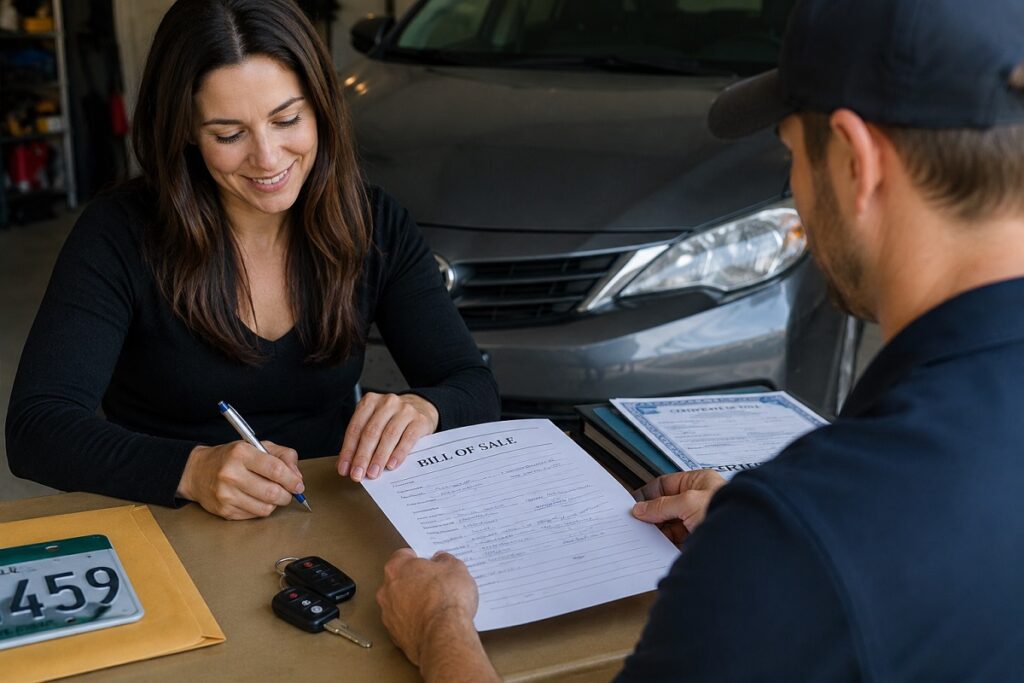
A detailed record of the vehicle sale acts as legal proof that the transaction took place. This documentation can verify:
- The agreed purchase price
- Vehicle condition at the time of sale
- Mileage on the odometer
- Date of transfer
- Names and signatures of both parties
This information matters because verbal agreements are difficult to prove. If disagreements arise over the condition of the car or payment terms, written records provide clarity.
Why the bill of sale matters
The bill of sale is one of the most valuable records in a private car sale. It should include:
- Vehicle Identification Number (VIN)
- Make and model
- Year of the vehicle
- Sale price
- Date of sale
- Buyer and seller information
- Signatures
A properly completed bill of sale can help support ownership transfer records and reduce confusion during registration.
Helps Resolve Tax and Financial Questions
Keeping car sale records is useful during tax season and financial reviews. In some cases, you may need to show proof of the amount received from the sale or the value of the vehicle.
This can become especially important for:
- Business-owned vehicles
- Vehicles used for freelance work
- Capital gains or loss documentation
- Estate settlements
- Divorce proceedings
If the IRS or another tax authority requests supporting documents, organized records can simplify the process.
Financial records worth saving
Keep copies of:
- Bank transfer confirmations
- Cash payment receipts
- Loan payoff statements
- Trade-in agreements
- Insurance cancellation documents
These records create a complete financial trail connected to the vehicle transaction.
Prevent Registration and Title Problems
Title and registration issues are common when records are incomplete. Problems often occur if the buyer fails to register the vehicle promptly or if paperwork contains errors.
Having copies of signed documents can help you respond quickly if the DMV contacts you.
Common title issues that records can solve
Incorrect ownership transfer
If ownership information is entered incorrectly, your records can verify the intended transfer details.
Lost title paperwork
Copies of documents help speed up replacement requests and ownership verification.
Registration delays
If a buyer waits too long to register the vehicle, proof of sale may protect you from penalties or notices.
Odometer disputes
An odometer disclosure statement can help avoid fraud claims and mileage disagreements.
Useful for Insurance Purposes

Insurance companies may request proof that the vehicle was sold before they remove it from your policy or close claims connected to the car.
If an accident occurs shortly after the transaction, your documentation can establish the transfer timeline.
Insurance-related records to keep
- Insurance cancellation confirmation
- Sale agreement
- Vehicle transfer paperwork
- Photos of the vehicle before the sale
Photographs can be especially useful because they document the condition of the car when ownership changed hands.
Supports Legal Protection in Private Car Sales
Private party vehicle sales often involve more risk than dealership transactions because there is less formal oversight. Good recordkeeping creates a layer of legal protection for both the buyer and seller.
Sellers benefit from documented disclosures
If you disclosed known problems with the car, written proof can reduce the risk of future claims from the buyer.
Examples include:
- Mechanical issues
- Existing damage
- Salvage title status
- Warning lights
- Pending repairs
A signed document confirming the buyer understood the vehicle condition can help protect against accusations of misrepresentation.
Buyers benefit from accurate records
Buyers also gain protection when they keep records of the purchase.
Important buyer records include:
- Vehicle history reports
- Maintenance records
- Emissions certificates
- Inspection paperwork
- Seller contact information
These documents may help if hidden issues appear after the purchase.
Helps With Future Vehicle History Verification
A documented car sale contributes to a more reliable ownership history. Future buyers and dealerships often value vehicles with complete records because they appear more trustworthy and better maintained.
When ownership history is unclear, resale value may decrease.
Records that strengthen vehicle history
- Maintenance receipts
- Service records
- Accident repair invoices
- Ownership transfer documents
- Warranty paperwork
Vehicles with organized documentation often sell faster because buyers feel more confident about the transaction.
Easier Dispute Resolution
Disagreements can happen even when both parties act honestly. Recordkeeping makes it easier to resolve misunderstandings quickly.
Examples of disputes that records can settle
Payment disagreements
Payment receipts and bank confirmations show whether the agreed amount was paid.
Vehicle condition claims
Photos and written disclosures document the condition at the time of sale.
Ownership disputes
Signed title copies and bills of sale prove the transfer occurred.
Delivery misunderstandings
Emails and text messages can confirm pickup dates and transportation arrangements.
Keeping digital and physical copies of these records adds extra security.
Recommended Ways to Store Car Sale Records
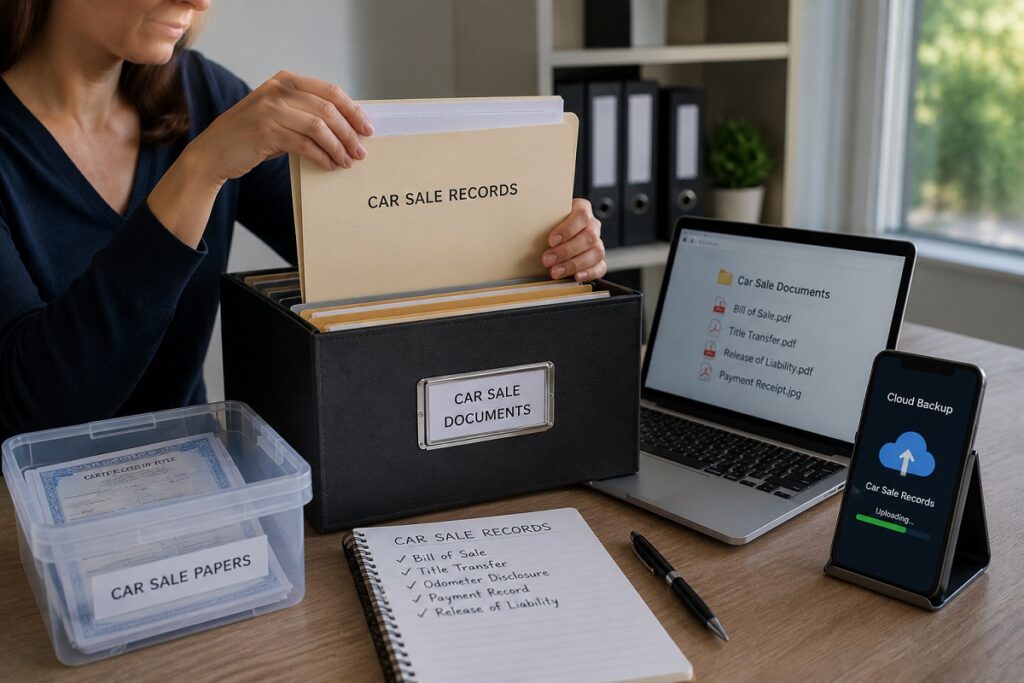
Good organization matters just as much as keeping the paperwork itself. Losing documents can create problems later.
Smart record storage tips
Keep both paper and digital copies
Scan important documents and save them securely in cloud storage or an external drive.
Organize files by date
Label folders clearly so records are easy to locate if needed later.
Save communication records
Keep emails, text messages, and online marketplace conversations connected to the sale.
Retain documents for several years
Many experts recommend keeping vehicle sale records for at least five years.
Documents You Should Never Throw Away Immediately
Some people discard paperwork after the title transfer is complete. That can be a costly mistake.
Certain documents should be retained long-term because they may still become relevant later.
Important records to keep
| Document | Why It Matters |
|---|---|
| Bill of sale | Proof of transaction |
| Release of liability | Protection from future claims |
| Title transfer copy | Ownership verification |
| Payment records | Financial proof |
| Vehicle photos | Condition documentation |
| Maintenance records | Vehicle history support |
| Insurance documents | Coverage verification |
These records create a complete timeline of the sale and help reduce uncertainty.
Digital Records Make Tracking Easier
Modern vehicle sales often involve electronic communication and online payments. Digital records can provide an additional layer of convenience and security.
Helpful digital records
- Screenshots of online listings
- Email confirmations
- Mobile payment receipts
- Electronic signatures
- Online marketplace messages
Backing up these files helps prevent data loss if devices fail or accounts become inaccessible.
Buyers Appreciate Well-Documented Sales
A seller who provides organized paperwork often appears more trustworthy and professional. Buyers are more comfortable completing a transaction when documentation is complete and transparent.
Providing detailed records can also:
- Improve buyer confidence
- Speed up the transaction
- Reduce negotiation problems
- Support higher resale value
- Create a smoother ownership transfer
This level of preparation benefits everyone involved in the sale.
Keeping Records Can Save Time and Stress
Vehicle-related problems sometimes appear months or years after the sale. Having quick access to accurate records can prevent hours of frustration and unnecessary legal complications.
Even simple documentation can make a major difference when proving ownership history, resolving DMV issues, or responding to financial questions.
Keeping records of the car sale is not just about organization. It is a practical way to protect yourself, support legal compliance, and maintain accurate proof of the transaction long after the vehicle changes hands.
Content reviewed and published by Sell My Car Colorado Editorial Team.