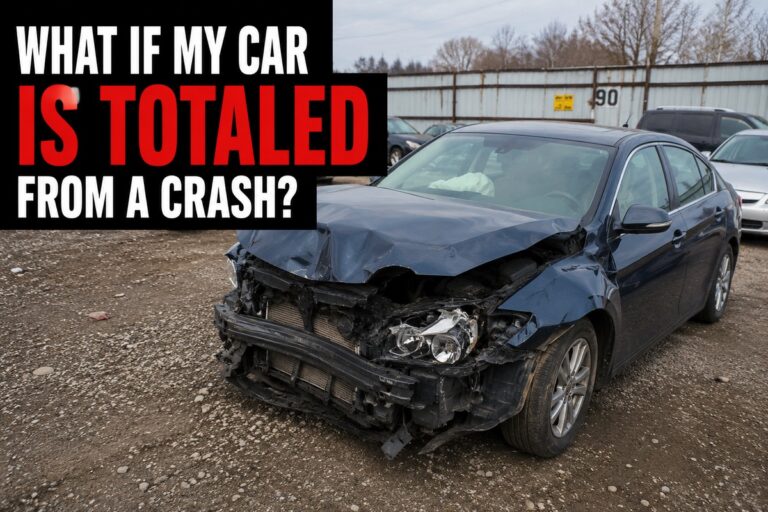
What if my car is totaled from a crash? After an accident, this is one of the biggest questions a vehicle owner can face, especially when the repair estimate is high or the car can no longer be driven. A totaled car does not necessarily mean the vehicle has no value. Depending on its condition, title status, insurance settlement, and remaining usable parts, you may still have several options for handling or selling a totaled car in Colorado.
Understanding what happens after a vehicle is declared a total loss can help you avoid unnecessary expenses and decide whether to keep the vehicle, accept an insurance settlement, or sell the damaged car.
What Happens When Your Car Is Totaled After an Accident?
After a serious crash, the insurance company will typically inspect the vehicle or review an estimate from a repair facility. The insurer compares the expected repair costs with the vehicle’s value before the accident.
If repairing the vehicle does not make financial sense under the insurer’s total-loss calculation and applicable Colorado requirements, the vehicle may be declared a total loss.
The amount of visible damage is not always what determines whether a car is totaled. A vehicle can still look relatively intact while having expensive structural, mechanical, electrical, or safety-related damage.
Common accident damage that can contribute to a total-loss decision includes:
- Frame or structural damage
- Deployed airbags
- Major suspension damage
- Engine or transmission damage
- Extensive front-end or rear-end damage
- Severe damage to multiple body panels
- Electrical system damage
- Cooling system damage
- Damage affecting advanced driver-assistance sensors
- Repairs that require significant labor and replacement parts
Older vehicles can sometimes be totaled after crashes that appear relatively minor because their pre-accident market value is lower.
How Is the Value of a Totaled Car Determined?
Insurance companies generally look at what the vehicle was worth immediately before the accident rather than what you originally paid for it.
Several factors can influence the valuation, including:
- Year, make, and model
- Mileage
- Trim level
- Optional equipment
- Pre-accident condition
- Vehicle history
- Local market values
- Comparable vehicles for sale
- Previous damage
If your car is totaled, carefully review the valuation provided by the insurance company. Make sure the mileage, trim, options, and vehicle condition are listed accurately.
If something is incorrect, you may be able to provide documentation showing why the vehicle should have a different pre-accident value.
Keep Records of Your Vehicle’s Condition
Documentation can be useful when reviewing a total-loss settlement.
Maintenance records, recent repair receipts, photographs from before the accident, and information about major improvements may help establish the vehicle’s condition.
Recent repairs do not necessarily increase a settlement dollar-for-dollar, but having records can still be useful when discussing the vehicle’s value with the insurer.
What Happens to a Totaled Car After the Insurance Settlement?
What happens next depends on the insurance claim and whether you choose to surrender or retain the damaged vehicle.
In a typical total-loss claim, the insurance company pays the covered settlement amount and takes possession of the vehicle. The insurer may then send the totaled car to a salvage auction or another buyer.
In some situations, an owner may have the option to keep the totaled vehicle. If you retain the car, the insurer may deduct its salvage value from the settlement.
Before deciding to keep a totaled car, consider whether doing so makes financial sense.
Should You Keep Your Totaled Car?
Keeping a totaled vehicle can make sense in certain circumstances, but it can also create additional responsibilities.
Before making your decision, consider:
- The amount deducted from your insurance settlement
- The severity of the accident damage
- Whether the car is safe or practical to repair
- Towing and storage expenses
- Colorado title requirements
- Whether you plan to repair or sell the vehicle
- The car’s current salvage or junk value
- Whether you still owe money on the vehicle
If you do not intend to repair the car, selling the totaled vehicle may be more practical than paying to store it.
Can You Sell a Totaled Car in Colorado?
Yes, a totaled vehicle can often still be sold in Colorado, provided the ownership and title requirements applicable to the vehicle are handled correctly.
There is a market for damaged, salvage, and junk cars because vehicles can retain value even when repairing them for normal road use no longer makes financial sense.
A buyer may be interested in the car for its:
- Engine
- Transmission
- Catalytic converter
- Wheels and tires
- Body panels
- Interior components
- Electronics
- Mechanical parts
- Scrap metal
- Other reusable components
This is why a wrecked vehicle can still be worth money even if it cannot be driven.
Selling a Totaled Car That Does Not Run
A totaled car does not need to be drivable to have potential resale value.
After a major collision, you might have a vehicle with a crushed front end, broken suspension, damaged cooling system, deployed airbags, or severe body damage. Starting or driving the vehicle after a crash may also be unsafe.
If you plan to sell a non-running totaled car, look for a buyer that accepts vehicles in their current condition.
At Sell My Car Colorado, we buy used and junk cars in Colorado, including vehicles with significant damage. This can provide an alternative for owners who do not want to repair a wrecked or totaled vehicle before selling it.
What If You Still Owe Money on the Totaled Car?
A loan does not automatically disappear when a car is totaled.
If you financed the vehicle, the lender generally has a financial interest in the car. Insurance proceeds may first be applied toward the outstanding loan balance.
For example, if your insurance settlement is less than what you still owe, there may be a remaining loan balance.
Gap coverage may help with certain differences between an insurance settlement and the outstanding loan balance when the policy’s requirements are met.
Before attempting to sell a financed totaled vehicle, contact your lender and insurance company. You need to understand the payoff amount and determine how the title or lien will be handled.
Do Not Assume the Insurance Payment Pays Off the Loan
The vehicle’s market value and your loan balance are two separate amounts.
Someone who recently purchased a vehicle, financed taxes and fees, or rolled an old loan balance into a new loan could owe more than the vehicle’s pre-accident value.
Review your loan payoff information before deciding what to do with the totaled car.
What If the Totaled Car Is Sitting at a Tow Yard?
After a crash, vehicles are frequently transported to a towing company, repair facility, or storage yard.
This can become expensive because storage charges may continue accumulating while the vehicle remains there.
If your car has been declared totaled, find out:
- Where the vehicle is located
- Whether storage fees are accumulating
- Who is currently responsible for those charges
- Whether the insurer plans to move the vehicle
- When the car needs to be removed
Do not leave a totaled vehicle at a storage facility simply because you have not decided what to do with it. Additional fees can reduce the amount of money you ultimately receive from the vehicle.
Can You Sell a Totaled Car Instead of Repairing It?
If you retain ownership of the totaled vehicle, selling it may be an alternative to repairing it.
Major collision repairs can involve far more than replacing damaged body panels. Modern vehicles may require structural work, airbag replacement, electronic calibration, suspension repairs, sensors, cameras, and other expensive components.
You should compare the cost and effort of repairs against what you could realistically gain from keeping the vehicle.
Selling may be worth considering when:
- Repair costs are extremely high
- The vehicle has extensive structural damage
- Multiple airbags deployed
- The car no longer runs
- You do not want to invest money into repairs
- You need the vehicle removed from your property
- You already plan to replace the vehicle
- The car has value primarily for parts or scrap
A totaled car buyer may purchase the vehicle without requiring you to restore it first.
How Accident Damage Affects a Car’s Resale Value
A major accident can significantly reduce a vehicle’s resale value, even if repairs are possible.
Buyers often consider accident history, structural repairs, title status, and the overall condition of a vehicle when deciding how much they are willing to pay.
For severely damaged vehicles, repairing the car solely to sell it may not always provide a good return.
Suppose a vehicle requires thousands of dollars in body, mechanical, and safety repairs. After spending that money, its accident history could still affect what a future buyer is willing to pay.
That is one reason owners should compare an as-is offer for a wrecked car with the estimated cost and potential value after repairs.
What Documents Should You Gather Before Selling a Totaled Car?
Having your paperwork ready can make selling a damaged vehicle easier.
The exact documents needed can depend on the vehicle’s circumstances and title status, but useful items may include:
- Vehicle title
- Government-issued identification
- Insurance total-loss paperwork
- Lien release, when applicable
- Loan payoff information
- Vehicle registration
- Keys
- Relevant title or salvage documents
Before transferring the vehicle, make sure you understand the current title status and any Colorado requirements that apply.
If an insurance company has already taken ownership of the vehicle, you generally cannot separately sell it. Confirm who legally owns the car before accepting an offer.
Should You Remove Personal Belongings Before the Car Is Taken?
Yes. Before a totaled car is released to an insurance company, towing company, salvage buyer, or junk car buyer, thoroughly check the vehicle for personal property.
Look inside:
- Glove compartment
- Center console
- Trunk
- Door pockets
- Under the seats
- Seat-back pockets
- Cargo compartments
- Roof storage areas
Also remove toll devices, garage door openers, charging cables, personal documents, and other belongings.
If you have personalized license plates or other items that need to remain with you, determine what should be removed before transferring the vehicle.
Avoid Spending Money on Unnecessary Repairs Before Selling
If your goal is to sell a totaled or wrecked car as-is, major repairs may not be necessary.
A damaged-car buyer is generally evaluating the vehicle based on its current condition. Spending money replacing a bumper, windshield, headlights, airbags, or damaged body panels may not increase the offer enough to recover your costs.
Instead, provide accurate information about the vehicle.
Useful details include the year, make, model, mileage, title status, whether the car runs, where the primary damage is located, and whether major components are still intact.
Photos of the damaged vehicle can also help a buyer understand its condition before making an offer.
Compare the Costs of Keeping a Totaled Vehicle
A totaled car can become more expensive the longer it sits.
Even if you already own the vehicle outright, you may face towing charges, storage costs, repair estimates, transportation expenses, or other costs associated with keeping a non-running car.
When deciding whether to sell your totaled car, compare the realistic value of keeping it against the costs involved.
Ask yourself:
- How much would repairs actually cost?
- What would the vehicle be worth after repairs?
- Are storage charges increasing?
- Do I have somewhere to keep the car?
- Will I need to pay to tow it again?
- What could I receive by selling the damaged car as-is?
Looking at the complete financial picture can make the decision much easier.
Selling a Totaled or Wrecked Car in Colorado
If you decide you do not want to repair or keep the vehicle, selling it to a company that buys damaged and junk cars can simplify the process.
Sell My Car Colorado buys used and junk cars throughout Colorado, including vehicles that have been damaged in crashes. Depending on the vehicle, you may be able to sell a wrecked, non-running, or totaled car without investing additional money into repairs first.
When requesting an offer, provide accurate details about the accident and the vehicle’s current condition. Mention whether it starts, whether it can move under its own power, the location and severity of the damage, and the title status.
The more accurate the information, the easier it is to evaluate the vehicle.
A crash may end a car’s usefulness as your daily vehicle, but it does not automatically eliminate its value. If your car is totaled from a crash, review the insurance settlement carefully, determine who owns the vehicle after the claim, understand any loan or title requirements, and compare the costs of repairing it with the option of selling it as-is.
For Colorado vehicle owners who decide repairs are not worthwhile, selling a totaled, wrecked, or junk car can be a practical way to recover remaining value and move on from a vehicle that is no longer worth keeping.
Content reviewed and published by Sell My Car Colorado Editorial Team.