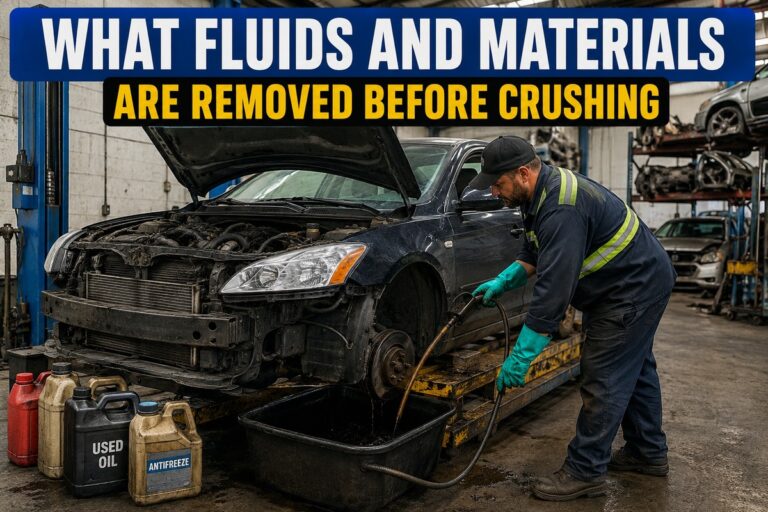
What fluids and materials are removed before crushing a car is an important part of the junk car recycling process, especially for vehicle owners who want to know what happens after selling an unwanted vehicle. Before a junk car reaches a crusher, automotive recyclers typically remove fluids, batteries, certain hazardous materials, reusable components, and other items that should not enter the crushing and metal-processing equipment.
For people selling used and junk cars in Colorado, this process helps explain why an old vehicle still has value even when it no longer runs. A junk car contains recyclable metals, reusable auto parts, automotive fluids, and materials that must be handled separately before the remaining vehicle shell can be processed as scrap metal.
Automotive Fluids Removed Before a Car Is Crushed
One of the most important stages of junk car processing is draining the vehicle’s fluids. Cars contain several liquids that should not be mixed with shredded steel or allowed to leak onto the ground.
The exact fluids present depend on the vehicle’s age, condition, drivetrain, and mechanical systems. A vehicle that has been sitting for years may also contain smaller amounts of fluid than a recently driven car.
Gasoline and Diesel Fuel
Fuel remaining in the gas tank is generally removed before a junk vehicle is crushed. Gasoline and diesel are flammable, so leaving fuel inside a vehicle can create unnecessary risks during dismantling, crushing, and shredding.
The fuel system may contain more than what is visible in the tank. Depending on the vehicle, fuel can remain in lines, filters, pumps, and other components.
Removing fuel helps prepare the vehicle for safer processing. Depending on its condition and the recycler’s procedures, recovered fuel may be appropriately stored, reused, recycled, or otherwise managed according to applicable requirements.
Engine Oil
Used motor oil is another major fluid removed during vehicle recycling. Even an engine that has not operated recently can contain several quarts of oil.
Engine oil can collect contaminants as it circulates through a motor. Allowing it to leak during crushing could contaminate other recyclable materials and create environmental concerns.
During vehicle depollution, recyclers can drain the oil into dedicated containers. Used oil may then be sent through an appropriate recycling or recovery process rather than remaining inside the engine when the vehicle is crushed.
Transmission Fluid
Automatic and manual transmissions can contain lubricating fluids that need to be addressed before crushing.
Automatic transmission fluid is particularly important because a transmission and its related components may hold a significant quantity of liquid. Fluid may remain in the transmission itself, transmission cooler, hoses, and lines.
Removing transmission fluid before scrap processing helps keep liquids out of crushing and shredding equipment and allows the fluid to be handled separately.
Engine Coolant and Antifreeze
Radiators, engines, hoses, and coolant reservoirs can contain antifreeze or engine coolant. These fluids are designed to regulate engine temperature, but they are not something recyclers want spilling out when a junk vehicle is flattened or shredded.
Coolant removal can involve draining several parts of the cooling system rather than simply emptying the overflow reservoir.
Common locations where coolant may remain include:
- The radiator
- Engine coolant passages
- Coolant reservoir
- Heater core
- Radiator and heater hoses
Recovering coolant before crushing makes it easier to manage the fluid separately from the vehicle’s recyclable metal.
Brake Fluid
Brake systems use hydraulic fluid to transfer pressure from the brake pedal to braking components. Even though the quantity is smaller than the amount of engine oil or coolant in most vehicles, brake fluid still needs proper handling.
Fluid can remain in the master cylinder, brake lines, calipers, and wheel cylinders. Vehicle recyclers may remove or manage this fluid as part of the depollution and dismantling process.
Power Steering Fluid
Many older vehicles use hydraulic power steering systems containing power steering fluid. The reservoir, pump, hoses, and steering rack can all retain fluid.
Newer vehicles may use electric power steering and therefore have no hydraulic power steering fluid. The recycling process varies according to the vehicle’s design.
For vehicles with hydraulic systems, removing the fluid helps reduce the chance of leaks once the car is moved, dismantled, or crushed.
Windshield Washer Fluid
Windshield washer fluid may seem minor compared with fuel or motor oil, but it is another liquid that can be removed from an end-of-life vehicle.
The washer reservoir can hold a substantial amount of fluid when full. Depending on the recycler’s procedures, the fluid may be drained or recovered before the remaining vehicle is processed.
Air Conditioning Refrigerant
A vehicle’s air conditioning system contains refrigerant rather than a conventional automotive liquid. Refrigerant requires specialized handling and should not simply be released when an air conditioning line is cut or when a vehicle is crushed.
Recyclers and technicians use appropriate recovery equipment when refrigerant needs to be removed from an automotive A/C system.
This is one reason owners generally should not try to completely dismantle a junk car themselves before selling it. Some materials and systems require equipment and handling procedures that the average vehicle owner may not have.
Batteries Are Removed Before Crushing
The standard 12-volt automotive battery is normally removed from a junk vehicle before the vehicle body is crushed or shredded.
Car batteries contain materials that are valuable for recycling but need to be kept separate from general automotive scrap. Traditional lead-acid batteries contain lead and sulfuric acid, making proper recovery particularly important.
Once removed, automotive batteries can enter a dedicated battery recycling stream where materials such as lead and plastic can be recovered.
Hybrid and Electric Vehicle Batteries Need Different Handling
Hybrid vehicles, plug-in hybrids, and electric vehicles require additional attention because they may contain high-voltage battery packs.
These batteries are very different from conventional 12-volt starter batteries. They may use lithium-ion, nickel-metal hydride, or other battery chemistries and can retain dangerous electrical energy even when the vehicle does not run.
A recycler handling an electric or hybrid junk car may need to identify and isolate the high-voltage system before further dismantling or crushing occurs.
For sellers, this means it is important to accurately identify a vehicle as an EV, hybrid, or plug-in hybrid when requesting a junk car quote.
Tires and Wheels May Be Removed
Tires are generally handled separately from the steel body of a junk car. Rubber does not belong in the same recycling stream as the vehicle’s primary metal structure.
Depending on the condition of the wheels and tires, several things can happen. Usable tires may have additional value, damaged tires may be directed to tire recycling, and metal wheels may be separated for their scrap or resale value.
Wheels can contain valuable recyclable metals. Steel wheels can enter steel recycling streams, while many alloy wheels contain aluminum that can be processed separately.
For someone selling a junk car, having all four wheels can also make transportation easier. A vehicle that rolls is generally easier to load onto a tow truck than one sitting directly on the ground.
Mercury-Containing Components May Require Removal
Some older vehicles contain switches or other components that use mercury. These components require special attention because mercury should not enter normal scrap metal processing.
The presence of mercury-containing components depends heavily on the vehicle’s make, model, year, and equipment.
Identifying and removing applicable components before shredding helps prevent mercury from entering the scrap metal recycling stream.
Airbags and Safety Components
Airbags contain inflators and other components that require appropriate handling during automotive recycling. An undeployed airbag is not simply another piece of fabric inside the vehicle.
Depending on the vehicle and recycling operation, undeployed airbags may be deployed, removed, or otherwise managed before the vehicle proceeds through later stages of dismantling and scrap processing.
Modern cars can contain multiple airbags in locations such as:
- Steering wheels
- Dashboards
- Seats
- Doors
- Roof rails
- Side panels
Because newer vehicles may contain many supplemental restraint components, recyclers need to consider more than just the driver’s steering-wheel airbag.
Catalytic Converters Are Often Removed
Catalytic converters are frequently removed before a junk vehicle is crushed because they contain recoverable materials and can be processed separately from the rest of the exhaust system.
Depending on the converter, recoverable precious metals can include platinum, palladium, and rhodium. The exact amount and value vary significantly between vehicles and converter types.
A catalytic converter may therefore represent a meaningful portion of the recyclable material value contained in an end-of-life vehicle.
For owners selling junk cars in Colorado, it is usually better to accurately describe whether the catalytic converter is still installed. Missing major components can affect a junk car’s value.
Reusable Auto Parts Can Be Removed Before Crushing
Not everything removed from a junk car is hazardous. Vehicles may contain perfectly usable parts even when repairing the entire car no longer makes financial sense.
A recycler or salvage operation may evaluate components before sending the remaining shell to the crusher.
Potentially reusable or separately recyclable components can include:
- Alternators and starters
- Engines and transmissions
- Doors and body panels
- Mirrors
- Headlights and taillights
- Electronic modules
- Seats and interior components
- Radiators
- A/C compressors
- Suspension components
- Wheels
- Certain glass components
Whether these parts are removed depends on their condition, market demand, the vehicle model, and the recycler’s operation.
This ability to recover individual components is one reason a non-running or severely damaged vehicle can still have value.
Valuable Metals Are Separated During Vehicle Recycling
Cars contain much more than ordinary steel. A vehicle may contain several types of metals that can be recovered at different stages of dismantling and scrap processing.
Steel and iron make up a substantial portion of many vehicles, but aluminum, copper, and other metals can also be valuable.
Aluminum Components
Aluminum is widely used in modern vehicles because it is lightweight and corrosion resistant. Depending on the vehicle, aluminum may be found in engines, transmissions, wheels, hoods, suspension parts, and structural components.
Some aluminum components can be removed before crushing, while additional aluminum may be separated later during shredding and material sorting.
Copper Wiring
Vehicles contain extensive electrical wiring. Copper can be found in wiring harnesses, electric motors, alternators, starters, and numerous electrical systems.
Modern vehicles often have increasingly complex electrical systems, meaning even a junk car can contain a significant network of wiring and electronic components.
Some higher-value components may be removed during dismantling, while other metals are recovered after shredding.
What Happens to the Fluids After They Are Removed?
Draining a junk car is only part of the process. The recovered automotive fluids need to be stored and managed appropriately.
Different fluids generally should not simply be poured together. Used motor oil, gasoline, coolant, refrigerant, and other automotive substances can require different storage and processing methods.
Depending on the fluid and its condition, it may be:
- Recycled
- Re-refined
- Recovered for appropriate reuse
- Sent to an authorized processing facility
- Managed through an appropriate waste stream
Keeping fluids separated can improve recycling options while reducing contamination.
Why Cars Are Depolluted Before Entering the Crusher
A car crusher applies tremendous force to reduce a vehicle’s size. Anything left inside the vehicle can potentially rupture, spill, break, or become mixed with the crushed material.
Removing fluids and certain components beforehand makes the remaining vehicle better suited for scrap processing.
Proper vehicle preparation can help:
- Reduce fluid leaks during processing
- Keep hazardous or regulated materials separate
- Recover reusable automotive components
- Capture recyclable materials before crushing
- Reduce contamination of scrap metal
- Improve material sorting and recovery
- Prepare the vehicle body for shredding and metal recycling
The goal is not simply to flatten a vehicle. The vehicle is prepared so useful materials can be recovered and substances requiring separate handling do not unnecessarily enter the scrap stream.
What Happens After Fluids and Materials Are Removed?
Once the necessary fluids, batteries, components, and other materials have been removed or properly managed, the remaining vehicle can move further into the auto recycling process.
The vehicle shell may be crushed or flattened to make transportation and processing more efficient. It can then be sent to shredding equipment that breaks the vehicle into much smaller pieces.
After shredding, different materials can be separated. Ferrous metals such as steel can be recovered using magnetic separation, while nonferrous metals and other materials can undergo additional sorting.
Those recovered metals can then become raw material for manufacturing rather than remaining inside an abandoned or unwanted vehicle.
Should You Drain the Fluids Before Selling a Junk Car?
In many cases, a vehicle owner does not need to drain every automotive fluid before selling a junk car to a professional buyer or recycler. The facility handling the vehicle typically has procedures and equipment for preparing end-of-life vehicles.
Trying to drain fluids at home can create spills and leave you with used automotive liquids that still need proper disposal.
Instead, when selling a used or junk car, provide accurate information about its condition. Mention major issues that could affect pickup or processing, such as severe fluid leaks, missing wheels, fire damage, a removed engine or transmission, or a missing catalytic converter.
If you have already removed components or drained fluids, tell the buyer when requesting a quote. Accurate vehicle details can make the junk car selling and pickup process smoother.
Selling a Used or Junk Car in Colorado
When you sell a junk car, the vehicle does not instantly become a block of crushed metal. Fluids and materials are removed before crushing so automotive liquids, batteries, refrigerants, reusable parts, tires, valuable metals, and other components can be handled through appropriate recycling or recovery processes.
For Colorado vehicle owners, this means an old, damaged, wrecked, or non-running car may still contain recoverable value even when it is no longer worth repairing. The engine may contain recyclable metal, the wiring contains copper, wheels may contain aluminum or steel, and various parts may still be reusable.
If you are looking to sell a used or junk car in Colorado, Sell My Car Colorado can help you turn an unwanted vehicle into cash without having to dismantle the vehicle yourself. Provide accurate information about the car’s condition and major missing components so you can receive a quote based on the vehicle as it currently sits.
Content reviewed and published by Sell My Car Colorado Editorial Team.