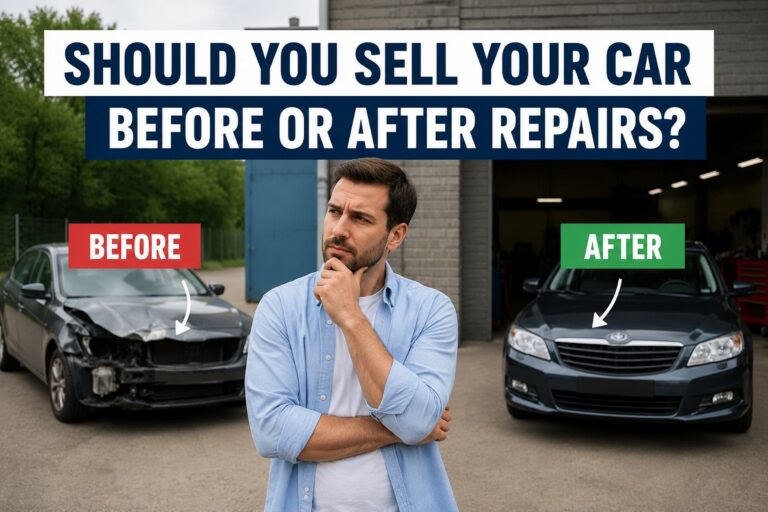
When deciding whether to sell your car before or after repairs, the answer depends on the vehicle’s condition, the cost of repairs, and the amount of money you expect to recover from the sale. Many Colorado vehicle owners struggle with this decision, especially when dealing with an older car, a damaged vehicle, or a junk car that may need expensive work. Understanding the financial impact of repairs can help you determine the best way to maximize your return while avoiding unnecessary expenses.
Assess the True Value of Your Vehicle
Before spending money on repairs, it is important to determine what your vehicle is worth in its current condition and what it might be worth after the repairs are completed.
Several factors affect vehicle value:
- Age of the car
- Mileage
- Mechanical condition
- Exterior and interior condition
- Accident history
- Market demand
- Make and model popularity
A vehicle that requires major engine, transmission, or structural repairs may not increase in value enough to justify the repair costs. In these situations, selling the car as-is can often be the smarter financial choice.
Compare Current Value vs. Potential Value
Request quotes from local car buyers and compare them to estimated values after repairs. If the difference between the two amounts is less than the repair cost, completing the repairs may not make financial sense.
For example, if repairs cost $2,500 but only increase the vehicle’s value by $1,500, you would lose money by fixing the car before selling it.
When Selling Before Repairs Makes More Sense
There are many situations where selling a used car or junk car without repairs is the better option.
Major Mechanical Problems
Cars with significant mechanical issues often require expensive repairs that rarely provide a full return on investment.
Examples include:
- Engine failure
- Transmission replacement
- Blown head gasket
- Severe electrical problems
- Suspension damage
Many cash car buyers purchase vehicles in these conditions and handle repairs themselves, making it unnecessary for owners to invest additional money.
High Mileage Vehicles
Older vehicles with high mileage typically have limited resale value regardless of repairs.
Even after spending money on maintenance, buyers may still view the vehicle as nearing the end of its useful life. Selling before repairs can help you avoid sinking money into a car that may continue developing new issues.
Junk Cars and Non-Running Vehicles
If a vehicle is no longer running or has extensive damage, repairs can quickly exceed the vehicle’s actual worth.
Selling a junk car as-is may be the most practical option because:
- No repair expenses are required
- No inspection appointments are needed
- The sale process is usually faster
- You avoid additional towing and storage costs
Urgent Need to Sell
Sometimes vehicle owners need cash quickly or want to remove an unwanted vehicle from their property.
Selling before repairs can provide:
- Faster transactions
- Immediate cash offers
- Less stress
- Reduced out-of-pocket expenses
Repairs That May Increase Selling Price
Not all repairs are a waste of money. Some relatively inexpensive improvements can make a vehicle more attractive to buyers and potentially increase its value.
Minor Cosmetic Repairs
Small cosmetic fixes often provide a good return because they improve first impressions.
These repairs may include:
- Touch-up paint
- Dent removal
- Headlight restoration
- Interior cleaning
- Replacing broken trim pieces
Buyers often judge a vehicle’s condition within seconds, making appearance an important factor.
Basic Maintenance Items
Routine maintenance can reassure potential buyers that the vehicle has been properly cared for.
Examples include:
- Oil change
- New windshield wipers
- Tire rotation
- Air filter replacement
- Fluid top-offs
These relatively inexpensive services may help support a higher asking price.
Safety-Related Repairs
Repairing critical safety issues can make the vehicle easier to sell and may attract more buyers.
Examples include:
- Brake repairs
- Tire replacement
- Fixing warning lights
- Replacing damaged mirrors
Buyers often hesitate when they see obvious safety concerns because they anticipate additional costs after purchase.
Calculate the Return on Repair Investment
One of the most effective ways to decide whether repairs are worthwhile is to calculate the expected return.
Questions to Ask Before Authorizing Repairs
- How much will the repair cost?
- How much will the repair increase vehicle value?
- Will additional problems likely appear soon?
- How long will the repair process take?
- How quickly do you need to sell?
Obtaining estimates from repair shops and comparing them with offers from used car buyers can provide a clearer picture of your options.
If repairs cost more than the increase in value, selling the car as-is is usually the better decision.
How Colorado Weather Can Affect Repair Decisions
Colorado’s climate can influence both vehicle condition and repair costs.
Vehicles throughout the state often experience:
- Hail damage
- Paint deterioration from intense sunlight
- Rust from winter road treatments
- Windshield cracks from road debris
In some cases, repairing weather-related damage may not significantly increase resale value. Buyers who specialize in used cars and damaged vehicles often purchase these cars regardless of cosmetic imperfections.
This makes it important to evaluate whether repairs will genuinely improve your selling price or simply add expenses.
Dealer Trade-In vs. Selling As-Is
Many vehicle owners compare trading in their vehicle to selling it before repairs.
Trade-In Advantages
- Convenience
- Faster process
- Reduced paperwork
Trade-In Disadvantages
- Lower offers for damaged vehicles
- Less flexibility
- Limited negotiation opportunities
Dealerships often deduct expected repair costs from trade-in values. As a result, owners may receive lower offers than they expected.
Selling directly to a used car buyer can sometimes provide a better outcome, especially for vehicles with mechanical problems, accident damage, or high mileage.
Signs You Should Skip Repairs and Sell Immediately
Certain warning signs indicate that repairing the vehicle may not be worthwhile.
Multiple Major Problems
If the car has several significant issues at the same time, repair costs can quickly exceed its value.
Examples include:
- Engine problems combined with transmission issues
- Extensive body damage
- Significant rust
- Repeated breakdowns
Repair Costs Exceed Vehicle Value
A common rule is to avoid repairs when the cost approaches or exceeds the vehicle’s market value.
Investing thousands of dollars into a vehicle worth only a few thousand dollars rarely makes financial sense.
Constant Maintenance Expenses
If you find yourself making frequent trips to repair shops, it may be time to sell rather than continue investing money into an aging vehicle.
Ongoing repairs can quickly become more expensive than replacing the vehicle altogether.
Benefits of Selling a Car As-Is
Many vehicle owners are surprised by the advantages of selling a used car or junk car without making repairs.
Benefits include:
- No repair expenses
- Faster sales process
- Immediate offers
- Less time spent preparing the vehicle
- No risk of unexpected repair complications
- Elimination of ongoing insurance and registration costs
For many sellers, convenience and cost savings outweigh the possibility of a slightly higher selling price after repairs.
Get Multiple Offers Before Making a Decision
The best way to determine whether repairs are worthwhile is to gather multiple offers for your vehicle in its current condition.
Comparing offers allows you to see exactly how much value buyers place on your vehicle before repairs. Once you know what the market is willing to pay, you can compare that amount with projected values after repairs and make a more informed decision.
In many cases, especially with older vehicles, damaged cars, high mileage vehicles, and junk cars, selling before repairs can save time, reduce expenses, and provide a better overall financial outcome. By carefully evaluating repair costs and expected resale value, you can choose the option that delivers the greatest return while avoiding unnecessary investment in a vehicle that may no longer justify the expense.
Content reviewed and published by Sell My Car Colorado Editorial Team.