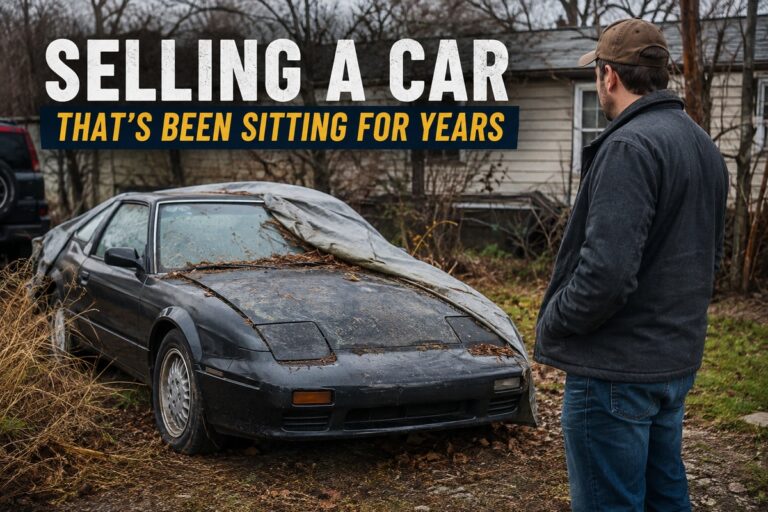
Selling a car that’s been sitting for years can feel complicated, especially when the vehicle no longer starts, has visible damage, or has been exposed to Colorado weather. A long-unused car may have mechanical problems, a dead battery, deteriorated tires, old fluids, rust, or other issues that make a traditional private sale more difficult.
The good news is that a car does not necessarily need to run or be in good condition to have value. Whether you have an older used car parked in a garage or a junk car taking up space in your driveway, understanding its condition and your selling options can help you get rid of it with fewer hassles.
What Happens to a Car After Sitting for Several Years?
Cars are designed to be driven regularly. When a vehicle remains parked for months or years, multiple components can deteriorate even though the mileage is not increasing.
How much deterioration occurs depends on the vehicle, how long it has been sitting, where it was stored, and its condition before it was parked.
Common problems with cars that have been sitting for years include:
- A completely discharged or damaged battery
- Flat or dry-rotted tires
- Old gasoline
- Corrosion on brake components
- Rust underneath the vehicle
- Seized or sticking brakes
- Deteriorated belts and hoses
- Fluid leaks
- Rodent or pest damage
- Mold, moisture, or unpleasant odors inside the cabin
- Electrical problems
- Engine or transmission issues
A vehicle stored inside a dry garage may be in considerably better condition than one that has spent several Colorado winters outdoors.
Should You Try to Start a Car That Has Been Sitting for Years?
Trying to start an old car immediately is not always the best approach. If a vehicle has been sitting for several years, simply installing a new battery and turning the key could create additional problems.
Old fuel can degrade over time. Fluids may be low or contaminated, and seals or hoses may have deteriorated. Animals can also build nests in engine compartments or damage wiring while a vehicle sits unused.
Before attempting to start the vehicle, consider checking:
- Engine oil level and condition
- Coolant
- Transmission fluid
- Brake fluid
- Fuel condition
- Battery and terminals
- Belts and hoses
- Visible wiring
- Air intake areas
- Signs of leaks underneath the car
If you are planning to sell the car as-is to a junk car buyer or used car buyer, getting it running may not even be necessary. Spending money to diagnose and repair an old vehicle can reduce the amount you ultimately walk away with.
Determine the Current Condition of the Vehicle
Before selling a car that has been sitting for years, take a realistic look at its current condition.
You do not need to perform a professional inspection just to gather basic information. Start by looking at the exterior, interior, engine compartment, and area underneath the vehicle.
Check the Exterior
Look for rust, dents, peeling paint, broken windows, missing parts, and other visible damage. Pay particular attention to areas where moisture may collect.
Colorado vehicles can experience damage from snow, road salt and deicing chemicals, hail, intense sunlight, and large temperature swings.
Look at the Tires and Wheels
Tires can lose pressure while sitting. Rubber also deteriorates with age, regardless of how much tread remains.
If the tires are cracked, flat, or severely weathered, the car may need to be towed instead of driven.
Inspect the Interior
Check for mold, water damage, pests, damaged upholstery, missing components, and odors.
A rough interior does not necessarily prevent you from selling a junk car. It is simply another factor that can influence the vehicle’s value.
Check Under the Hood
You do not need to take anything apart. Look for obvious corrosion, disconnected parts, damaged wiring, rodent nests, missing components, and signs of leaking fluids.
Being able to accurately describe these issues can make it easier to get a realistic offer when selling the vehicle.
Decide Whether the Car Is Worth Repairing Before Selling
One of the biggest decisions is whether to repair the vehicle or sell it as-is.
A repair can make sense when the car is relatively valuable, the problem is inexpensive to fix, and getting it running would significantly increase its resale value.
However, repairs can quickly become expensive on a vehicle that has been sitting for several years.
For example, you might replace the battery only to discover problems with the fuel system. After addressing that, you may find that the brakes, tires, cooling system, or other components also need attention.
Before spending money, compare the estimated repair costs with the amount the repairs are realistically likely to add to the vehicle’s selling price.
For an older, high-mileage, damaged, or non-running car, selling the vehicle as-is may be the more practical option.
Can You Sell a Car That Doesn’t Run?
Yes. A non-running car can still have value.
Used car buyers, junk car buyers, salvage buyers, and automotive recyclers may purchase vehicles that cannot be driven. Depending on the vehicle, its value may come from usable components, recyclable materials, or the possibility of repairing it.
You may be able to sell a car even if it has:
- A dead engine
- Transmission failure
- Electrical problems
- Flat tires
- Severe rust
- Collision damage
- Missing parts
- High mileage
- An expired battery
- Mechanical problems that cost too much to repair
If your goal is simply to sell a junk car that has been sitting on your property, you may not need to invest money into getting it roadworthy first.
Gather the Information Needed to Sell the Car
Having accurate vehicle information can help you receive a more appropriate offer and make the selling process smoother.
Before contacting a used or junk car buyer, gather as much of the following information as possible:
- Year
- Make
- Model
- Trim level, if known
- Vehicle Identification Number (VIN)
- Approximate mileage
- Overall exterior condition
- Interior condition
- Whether the engine starts
- Whether the car can be driven
- Major mechanical problems
- Missing parts
- Accident or body damage
- Title information
You should also be upfront about how long the car has been sitting. A vehicle that has not moved for five years presents different considerations from one that has only been parked for several months.
Find the VIN Before Requesting an Offer
The VIN helps identify the exact vehicle and can be useful when requesting a quote.
The VIN is commonly located on the driver’s side of the dashboard near the windshield. It may also appear on the driver’s side door jamb and vehicle paperwork.
Providing the correct VIN helps prevent confusion about the vehicle’s year, model, engine, and other specifications.
Handle the Vehicle Title and Paperwork
Paperwork is an important part of selling any used or junk car in Colorado.
Locate the vehicle title before you begin the sale whenever possible. Check that the information on the title is accurate and determine whether there are any liens associated with the vehicle.
If you cannot find the title, do not assume the car is impossible to sell. Instead, determine what documentation is required for your specific situation before agreeing to a sale.
Avoid signing blank title documents or completing ownership-transfer sections until you understand how the transaction will be handled.
Be Accurate When Describing a Car That Has Been Sitting
You do not need to make an old car sound better than it is.
If the engine does not start, say so. If you do not know whether the transmission works, explain that the vehicle has been sitting and its current mechanical condition is unknown.
Accurate descriptions can help prevent last-minute disagreements about the offer.
Useful details might include:
- “The vehicle has been sitting outside for four years.”
- “The engine ran when it was parked, but it has not been started recently.”
- “The battery is dead.”
- “Two tires are flat.”
- “There is rust around the wheel wells.”
- “The engine does not run.”
- “The mechanical condition is unknown.”
Clear information allows a car buyer to evaluate the vehicle based on its actual condition.
Consider Towing Before Choosing a Buyer
Transportation can be one of the biggest obstacles when selling a non-running car.
If the car cannot safely be driven, you may need towing or vehicle removal. Before accepting an offer, determine who is responsible for moving the car and whether towing affects the amount you receive.
This is especially important if the vehicle:
- Has flat or missing tires
- Has locked wheels
- Cannot shift into neutral
- Has been sitting on soft ground
- Is parked in a tight garage or narrow driveway
- Has missing suspension components
- Cannot be safely driven
Tell the buyer about access problems in advance. This gives them a better idea of what may be required to remove the vehicle.
Don’t Assume an Old Junk Car Is Worth Nothing
It is easy to look at a rusty, non-running vehicle and assume it has no value. That is not always the case.
Even a junk car may contain valuable components and recyclable materials. Certain vehicles may also have higher demand for used parts.
Factors that can affect junk car value include the vehicle’s:
- Make and model
- Model year
- Weight
- Completeness
- Mechanical condition
- Body condition
- Demand for parts
- Major components that are still present
- Current market conditions
For this reason, getting an offer before paying someone simply to haul the car away can be worthwhile.
Remove Your Personal Belongings Before the Car Is Picked Up
Cars that sit for years often become storage spaces. Before selling the vehicle, carefully check the cabin, trunk, center console, door pockets, glove compartment, and underneath the seats.
Remove personal belongings, paperwork, garage door openers, electronics, tools, and anything else you want to keep.
Also remember to remove personal accessories or equipment that are not intended to be included with the sale.
Remove or Handle the License Plates as Required
Do not forget about the license plates when getting rid of an old vehicle.
Before the car leaves your possession, determine what needs to happen with the plates and registration based on current Colorado requirements and your circumstances.
Taking care of the ownership transfer properly helps establish that the vehicle is no longer yours after the transaction is completed.
Avoid Putting Too Much Money Into a Junk Car
It is easy to spend several hundred dollars trying to make an old vehicle more appealing before selling it.
That does not always produce a good return.
If the vehicle is being sold as a junk car, expensive detailing, new tires, major mechanical repairs, bodywork, and cosmetic upgrades may not significantly increase what a junk car buyer is willing to pay.
Before spending money, ask yourself whether the improvement will add more to the selling price than it costs.
Cleaning out personal belongings and gathering paperwork makes sense. Spending thousands of dollars repairing a vehicle you already intend to sell may not.
Selling Privately vs. Selling to a Used or Junk Car Buyer
A private sale can sometimes generate a higher asking price for a running vehicle in good condition. It can be more difficult when dealing with a car that has been sitting for years.
Private buyers may expect test drives, inspections, repairs, or negotiations. You may also have to take photos, create listings, respond to inquiries, arrange meetings, and figure out towing if the car does not run.
Selling directly to a used or junk car buyer can be more straightforward for vehicles with significant mechanical problems or long periods of inactivity.
Consider factors beyond the initial offer, including:
- Whether the buyer accepts non-running vehicles
- Towing arrangements
- How quickly the vehicle can be removed
- Paperwork requirements
- Whether the offer could change at pickup
- Payment method
- Any fees associated with the transaction
The best option depends on the vehicle’s condition and how much time and effort you want to put into selling it.
Selling a Car That’s Been Sitting Outside in Colorado
A vehicle stored outside in Colorado deserves additional attention because weather can affect its condition.
Snow and moisture can contribute to corrosion. Hail can damage body panels and glass. Strong sunlight can fade paint and damage interior surfaces. Repeated freezing and thawing can also be hard on aging rubber, plastic, seals, and other components.
If the car has been parked outdoors for several years, inspect underneath and around the vehicle before trying to move it.
You should also check whether weeds, debris, mud, ice, or other obstacles have accumulated around the tires. A vehicle that looks easy to remove may require additional work once a tow truck arrives.
How to Prepare a Long-Sitting Car for Sale
Preparing the vehicle does not necessarily mean repairing it. The goal is to make the transaction easier and provide the buyer with accurate information.
A practical preparation process includes:
- Locate the title and relevant vehicle paperwork.
- Find and record the VIN.
- Check the approximate mileage if possible.
- Inspect the vehicle for obvious damage.
- Determine whether it starts.
- Do not drive it if you are unsure whether it is safe.
- Take clear photos of the exterior and interior.
- Remove all personal belongings.
- Describe major problems accurately.
- Confirm towing or pickup arrangements before completing the sale.
Following these steps can save time and reduce complications when selling an old car that has not been driven in years.
Get an Offer for Your Used or Junk Car in Colorado
Selling a car that’s been sitting for years does not have to mean repairing it, getting it back on the road, or spending weeks looking for a private buyer. Depending on its condition, selling the vehicle as-is can be a simpler way to clear space and avoid putting more money into a car you no longer want.
Sell My Car Colorado buys used and junk cars throughout Colorado, including vehicles that have been sitting, damaged cars, older vehicles, and non-running cars. If you have a car taking up space in your driveway, garage, yard, or property, getting an offer can help you understand what the vehicle may still be worth.
Gather the year, make, model, VIN, mileage, and information about the vehicle’s current condition before requesting an offer. The more accurate the details are, the easier it is to evaluate your used or junk car and determine the next steps for selling it.
Content reviewed and published by Sell My Car Colorado Editorial Team.