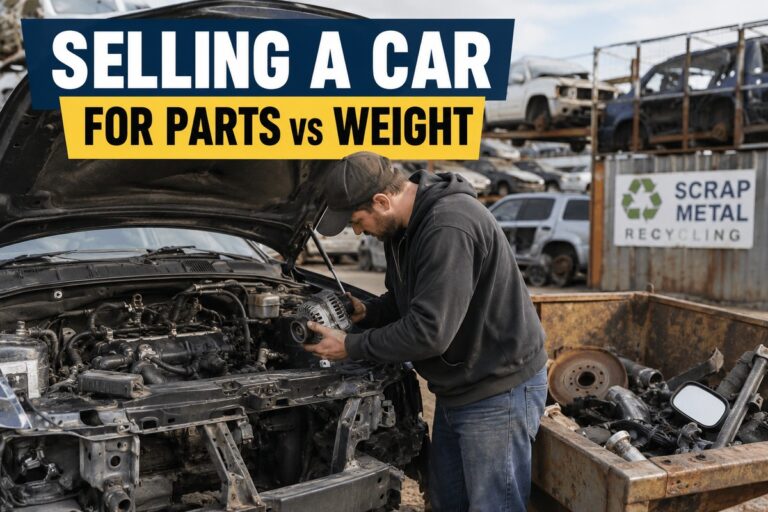
Selling a car for parts vs weight can make a significant difference in how much money you receive for a used, damaged, or junk vehicle. A car that looks like it has little value may still contain desirable components, while another vehicle may be worth more based primarily on its scrap metal weight. Knowing which factors affect each option can help Colorado vehicle owners make a more informed decision before selling a junk car.
Selling a Car for Parts vs Weight: Which Pays More?
There is no single option that pays more for every vehicle. The better choice depends on the car’s age, condition, make, model, usable components, completeness, and current scrap value.
A relatively complete vehicle with desirable mechanical and electronic components can have considerable parts value. Engines, transmissions, catalytic converters, wheels, body panels, electronics, and other components may contribute to what a junk car buyer is willing to pay.
A severely damaged, stripped, burned, or very old vehicle may have less value from reusable components. In those situations, the vehicle’s weight and recoverable metals can become a larger part of its overall value.
When Parts Can Increase a Junk Car’s Value
Parts value becomes especially important when a vehicle still has components that can be removed and reused. A car does not necessarily need to run for its parts to have value.
Depending on the vehicle, valuable used car parts can include:
- Engines and engine components
- Automatic and manual transmissions
- Catalytic converters
- Alternators and starters
- Factory wheels and rims
- Doors, hoods, bumpers, and fenders
- Headlights and taillights
- Mirrors
- Interior components
- Electronic control modules
- Infotainment and navigation equipment
- Suspension and drivetrain components
Demand matters just as much as condition. Parts from a common vehicle with many similar cars still on Colorado roads may have a stronger resale market than components from an uncommon model with limited demand.
Vehicle Condition Affects Parts Value
A vehicle can be worth more for parts when major components remain intact. Even if an engine no longer starts, other mechanical, electrical, body, and interior components may still be usable.
Collision damage also affects which parts retain value. A vehicle with severe front-end damage might still have a good transmission, rear body panels, wheels, interior, and electronics. A vehicle damaged on one side may have valuable components on the opposite side.
Flood, fire, corrosion, and extensive mechanical damage can reduce the number of usable components. Buyers generally consider what can realistically be recovered rather than simply counting the number of parts still attached to the car.
How Weight Affects Junk Car Value
When a vehicle is being valued primarily for scrap, its weight becomes much more important. Cars contain significant amounts of steel along with aluminum, copper, and other recyclable materials.
Larger and heavier vehicles generally contain more recyclable metal than smaller vehicles. This is one reason a full-size pickup, SUV, or van may have a different scrap value than a compact passenger car.
Weight alone, however, does not determine the final cash offer for a junk car. Scrap metal markets change, and buyers may also consider the vehicle’s location, completeness, transportation requirements, and recoverable components.
Scrap Metal Prices Can Change
Scrap car prices are not fixed. The market value of steel and other metals can rise or fall, affecting what a vehicle is worth when its value is heavily based on weight.
A quote based on scrap value may consider factors such as:
- Vehicle curb weight
- Amount of recoverable metal
- Current scrap metal prices
- Missing major components
- Vehicle type and size
- Towing and transportation requirements
- Local recycling and salvage market conditions
Because metal prices fluctuate, two similar junk vehicles sold at different times may receive different offers.
Complete Cars Can Be Worth More Than Stripped Cars
Removing parts before selling a junk car can sometimes reduce the offer more than expected. A complete vehicle gives a junk car buyer more material and potentially more reusable components to recover.
For example, removing the engine, transmission, catalytic converter, wheels, or other major components can substantially change a vehicle’s value. These items may represent valuable parts, valuable recyclable materials, or both.
If you are considering selling parts separately, compare the realistic amount you can receive for those parts with the reduction in the vehicle’s remaining junk value. The highest advertised price for an individual component is not necessarily what you will actually receive after accounting for removal, storage, selling time, and finding a buyer.
Selling Parts Individually Takes More Work
Parting out a car yourself may produce more total revenue in certain situations, but it is rarely the fastest way to sell a junk vehicle.
Selling individual car parts can involve:
- Identifying which components are usable
- Removing parts without damaging them
- Having tools and mechanical knowledge
- Cleaning and storing components
- Determining compatible makes and models
- Photographing and listing parts
- Communicating with multiple buyers
- Handling pickups or shipping
- Disposing of the remaining vehicle shell
A vehicle may sit for weeks or months while parts are sold individually. Owners should consider the value of their time and available storage space when deciding whether parting out a junk car makes financial sense.
Catalytic Converters Can Have Significant Value
The catalytic converter is one component that can strongly affect a junk vehicle’s offer. Catalytic converters contain precious metals used in emissions-control systems, and their value varies considerably by vehicle and converter type.
An original catalytic converter may affect the value of a complete junk car differently than an aftermarket replacement or a vehicle with the converter already removed.
If your car still has its original catalytic converter, mention that when requesting a junk car quote. Accurate information about major components helps a buyer evaluate the vehicle more precisely.
Engine and Transmission Value
Engines and transmissions are among the largest and potentially most valuable components in many used and junk vehicles. Their contribution to a vehicle’s price depends on condition, mileage, demand, and compatibility with other vehicles.
A running engine or working transmission may add parts value. Even a vehicle that cannot be driven can have desirable drivetrain components if the problem that disabled the car is unrelated.
For example, a vehicle totaled because of rear-end collision damage may still have a usable engine and transmission. In that case, valuing the car only by its weight could overlook potentially valuable components.
High-Mileage and Non-Running Vehicles
High mileage does not automatically eliminate parts value. Many components can remain usable even when the vehicle as a whole is no longer practical to repair.
A non-running car may still contain a functioning transmission, starter, alternator, wheels, electronics, body panels, interior parts, and other components. This is why providing an accurate description of a junk car can be important when requesting an offer.
Make, Model, and Year Matter
Two vehicles with similar weight can have very different values. Make, model, and model year influence parts demand and the number of components that can potentially be reused.
Popular vehicles can have stronger demand for replacement parts because more of them remain on the road. Trucks and SUVs may also have valuable drivetrain, suspension, body, and interior components in addition to their scrap metal value.
Older or less common vehicles are more complicated. Some may have limited parts demand, while others can have components that are difficult to find. Vehicle-specific demand should be considered alongside scrap weight.
Damage Type Can Change the Best Selling Option
The reason a vehicle became a junk car can help determine whether parts or weight contribute more to its value.
A car with a failed engine may still have a good transmission, body, interior, electronics, wheels, and other usable parts. A collision-damaged vehicle might retain valuable mechanical components. A heavily stripped vehicle, on the other hand, may rely more heavily on its remaining scrap metal value.
Vehicles commonly sold to junk car buyers include those with:
- Blown or failed engines
- Bad transmissions
- Major collision damage
- High mileage
- Expensive mechanical problems
- Severe cosmetic damage
- Missing components
- Long-term storage issues
- Repair costs that exceed the vehicle’s practical value
The overall condition of the vehicle determines whether reusable parts, scrap weight, or a combination of both drives the offer.
Should You Remove Valuable Parts Before Selling a Junk Car?
Removing parts before getting a junk car quote is not always the best strategy. If you remove valuable components, the buyer may reduce the offer because the vehicle is no longer complete.
Before taking anything off the vehicle, get a quote for the car in its current condition. You can then compare that offer with what you realistically expect to earn by selling selected parts separately.
Consider the complete process rather than just the potential selling price of a part. Removing an engine or transmission, for example, requires considerably more equipment and effort than removing a mirror or headlight.
You will also need a plan for the remaining car once desirable components are gone.
Why the Vehicle’s Location in Colorado Can Affect an Offer
Transportation can influence the amount a buyer can offer for a junk vehicle. A non-running car must usually be picked up with appropriate towing equipment, and the distance involved can affect transportation costs.
When requesting an offer for a junk car in Colorado, provide the vehicle’s correct location and explain whether it is easily accessible. A car sitting in a driveway is generally easier to retrieve than one in a difficult location or without accessible wheels.
Providing accurate location and condition information can help reduce surprises when the vehicle is picked up.
Information to Have Ready When Requesting a Quote
You can help a junk car buyer evaluate parts value and scrap value by providing detailed information from the beginning.
Have the following information available when possible:
- Year, make, and model
- Vehicle identification number (VIN)
- Approximate mileage
- Whether the vehicle runs
- Engine condition
- Transmission condition
- Major collision or body damage
- Whether the catalytic converter is present
- Whether the engine and transmission are present
- Missing wheels or other major components
- Vehicle location
- Title and ownership information
Photos can also be helpful when a vehicle has significant damage or missing components.
Compare the Whole-Car Offer Before Parting It Out
One of the simplest ways to decide between selling a car for parts vs weight is to find out what the complete vehicle is worth first.
Once you have a whole-car offer, you have a number to compare against the potential return from selling parts individually. If the difference is relatively small, selling the complete junk car may save substantial time and effort.
If the vehicle contains unusually valuable or desirable components, selling individual parts may deserve more consideration. The key is to compare realistic proceeds rather than assuming every usable component will sell quickly at a high price.
Avoid Valuing a Junk Car by Weight Alone
Looking at the approximate curb weight of a vehicle and multiplying it by a scrap metal rate does not necessarily provide an accurate estimate of what the vehicle is worth.
A junk car is made from multiple materials, and not every pound has the same recycling value. Processing, transportation, market conditions, missing components, and parts demand can all affect the final offer.
Likewise, online prices for used auto parts do not automatically represent the amount those parts add to a complete junk vehicle. Retail used-parts prices include testing, removal, inventory, storage, warranties in some cases, and the time required to find a customer.
A realistic junk car value considers the entire vehicle.
Getting the Most Value When Selling a Junk Car in Colorado
If you want to get the most value from a junk car, avoid making major changes to the vehicle until you know what it is worth in its current condition.
Keep major components with the vehicle when possible, describe its condition accurately, and disclose any missing parts when requesting a quote. Knowing whether the engine, transmission, catalytic converter, wheels, and other major components are present can help produce a more accurate offer.
It is also useful to compare the convenience of selling the complete vehicle against the time required to dismantle and sell parts individually. A higher theoretical parts value does not always result in more money once labor, storage, transportation, and unsold components are considered.
Selling a car for parts vs weight ultimately comes down to the specific vehicle. Some junk cars have strong value because of reusable engines, transmissions, body parts, electronics, and other components. Others derive most of their value from recyclable metal and overall vehicle weight.
If you have a used, damaged, non-running, or junk car in Colorado, Sell My Car Colorado can evaluate the vehicle as a whole rather than relying on a single factor. Providing the year, make, model, condition, location, and information about missing or damaged components can help you get an accurate offer and determine the value of your vehicle without having to dismantle it yourself.
Content reviewed and published by Sell My Car Colorado Editorial Team.