
Transferring ownership when selling a car in Colorado is a required legal process that ensures the vehicle title, registration, and liability are properly reassigned. Completing each step correctly protects the seller from future responsibility and allows the buyer to register and drive the vehicle without issues.
Colorado Vehicle Title Requirements When Selling a Car
In Colorado, the vehicle title is the primary document used to transfer ownership. The seller must provide a properly completed title to the buyer at the time of sale.
The title must be clear, meaning there are no outstanding liens unless a lien release is provided. If the title is damaged, incorrect, or missing information, the transfer can be delayed or rejected.
How to Complete the Colorado Title Correctly
When selling a car in Colorado, the seller must complete the following sections on the title:
- Buyer’s full legal name and address
- Sale date
- Purchase price
- Odometer reading
- Seller’s signature
Colorado does not allow erasures or white-out on the title. Any mistake may require applying for a duplicate title before the sale can be completed.
Selling a Car With a Lien in Colorado
If the vehicle has a lien, ownership cannot be transferred until the lien is released. The seller must:
- Pay off the remaining loan balance
- Obtain an official lien release from the lender
- Submit the lien release with the title
Buyers should not complete a transaction without proof that the lien has been cleared.
Bill of Sale Requirements in Colorado

Colorado requires a bill of sale for private vehicle sales. This document acts as proof of the transaction and is often needed during registration.
A valid Colorado bill of sale should include:
- Vehicle year, make, model, and VIN
- Buyer and seller names and addresses
- Sale price
- Date of sale
- Signatures from both parties
Keeping a copy of the bill of sale is recommended for tax records and legal protection.
Odometer Disclosure Rules in Colorado
Colorado law requires accurate odometer disclosure when transferring ownership of most vehicles. This disclosure protects buyers from mileage fraud and must be completed at the time of sale.
When Odometer Disclosure Is Required
Odometer disclosure is required for:
- Private party vehicle sales
- Most vehicles under a specific age threshold
- Title transfers involving ownership changes
The mileage must reflect the actual odometer reading at the time of sale. Providing false information can result in penalties and legal consequences.
Where the Odometer Disclosure Is Completed
In Colorado, odometer disclosure is usually completed directly on the title. In some cases, a separate odometer disclosure statement may be required.
Submitting the Colorado Notice of Transfer
One of the most important steps when transferring ownership when selling a car in Colorado is submitting a Notice of Transfer. This document officially notifies the state that the seller is no longer responsible for the vehicle.
Why the Notice of Transfer Matters
Failing to submit this notice can leave the seller liable for:
- Parking tickets
- Toll violations
- Traffic citations
- Accidents involving the vehicle
Submitting the Notice of Transfer removes the seller’s name from the vehicle record and helps prevent future issues.
Information Required for the Notice of Transfer
The seller will need:
- Vehicle identification number
- Buyer’s name and address
- Sale date
- Seller’s confirmation
This can typically be completed online and should be done as soon as the sale is finalized.
License Plates and Registration Rules in Colorado
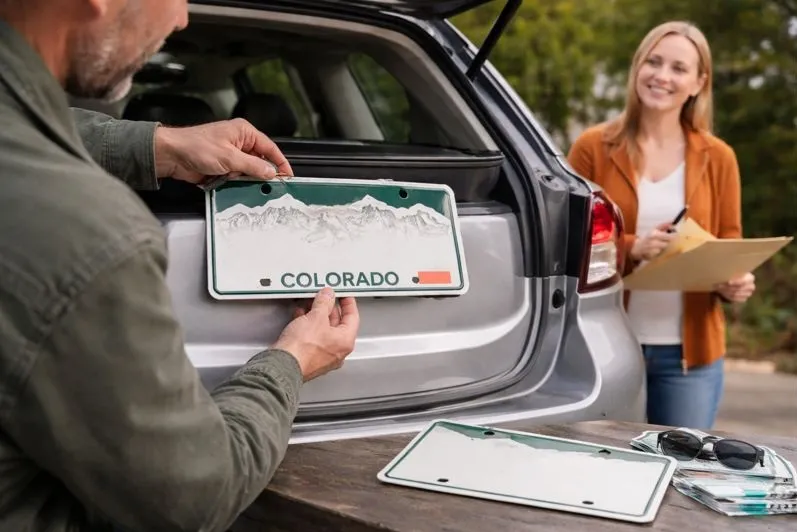
Colorado has specific rules regarding license plates and registration when a vehicle is sold.
What Sellers Must Do With License Plates
In Colorado, license plates stay with the seller, not the vehicle. The seller should:
- Remove the license plates before handing over the car
- Transfer plates to another vehicle if eligible
- Return plates if no longer needed
Leaving plates on the vehicle can result in misuse or liability issues.
Buyer Registration Responsibilities
The buyer must:
- Apply for a new title in their name
- Register the vehicle within the required timeframe
- Pay applicable taxes and fees
- Obtain new license plates
Driving without proper registration or plates can result in fines.
Colorado Sales Tax and Title Transfer Fees
Sales tax and title transfer fees are part of the ownership transfer process in Colorado.
Who Pays Sales Tax in Colorado
The buyer is responsible for paying:
- State sales tax
- Local city or county taxes
- Ownership tax based on vehicle value
These fees are typically paid when the buyer registers the vehicle.
Typical Fees Associated With Title Transfer
Fees may include:
- Title transfer fee
- Registration fee
- Plate issuance fee
- Ownership tax
The total cost varies depending on the vehicle and location.
Insurance Considerations During the Sale

Insurance coverage plays an important role during ownership transfer.
When Sellers Should Cancel Insurance
Sellers should keep insurance active until:
- The title is signed and handed over
- The vehicle is physically delivered
- The Notice of Transfer is submitted
Canceling insurance too early can expose the seller to liability.
Buyer Insurance Requirements in Colorado
Buyers must have valid insurance before registering or driving the vehicle. Proof of insurance is typically required during the registration process.
Selling a Car Without a Title in Colorado
Selling a car without a title in Colorado is not allowed. If the title is lost or damaged, the seller must apply for a duplicate title before completing the sale.
The duplicate title must be issued in the seller’s name and properly completed before ownership can be transferred.
Selling a Car to a Family Member in Colorado
Transferring ownership to a family member still requires completing all legal steps. However, certain tax exemptions may apply depending on the relationship.
Even when no money changes hands, the title must be signed, and the transfer must be recorded to avoid future liability.
Common Mistakes When Transferring Ownership in Colorado

Avoiding common mistakes helps ensure a smooth transaction.
Frequent errors include:
- Leaving license plates on the vehicle
- Forgetting to submit the Notice of Transfer
- Providing incorrect odometer readings
- Not keeping copies of documents
- Allowing the buyer to leave without a signed title
Double-checking paperwork before completing the sale can prevent delays and legal problems.
Final Steps After Selling a Car in Colorado
Once the vehicle is sold, sellers should:
- Confirm the Notice of Transfer was submitted
- Retain copies of all documents
- Monitor for any post-sale notices
- Cancel insurance after confirmation
Buyers should ensure the title and registration are processed and that all fees are paid.
Transferring ownership when selling a car in Colorado requires attention to detail and timely submission of documents. Completing each step properly ensures legal compliance, protects both parties, and allows the transaction to close without complications.
Content reviewed and published by Sell My Car Colorado Editorial Team.