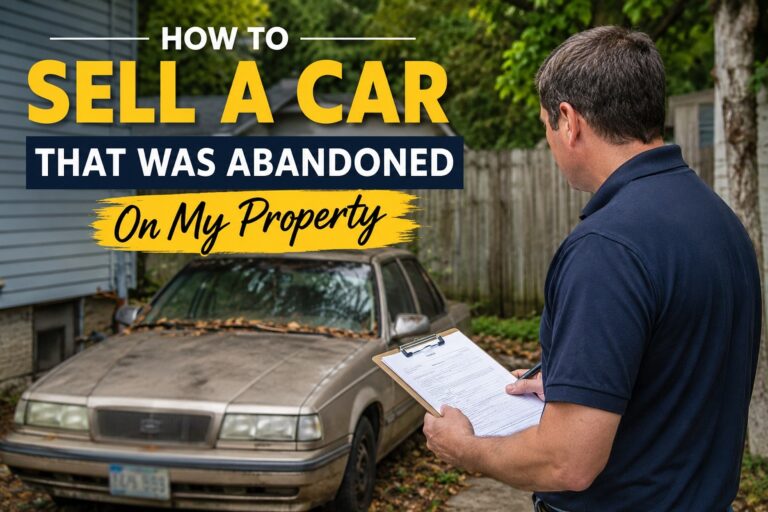
How to sell a car that was abandoned on my property is a question many property owners face when a vehicle has been left behind for weeks or even months without any contact from the owner. Whether the vehicle was abandoned by a former tenant, a customer, a visitor, or an unknown individual, there are legal procedures that must be followed before selling the vehicle. Understanding the proper steps can help you avoid legal issues and ensure the process is completed correctly.
Determine Whether the Vehicle Is Legally Abandoned
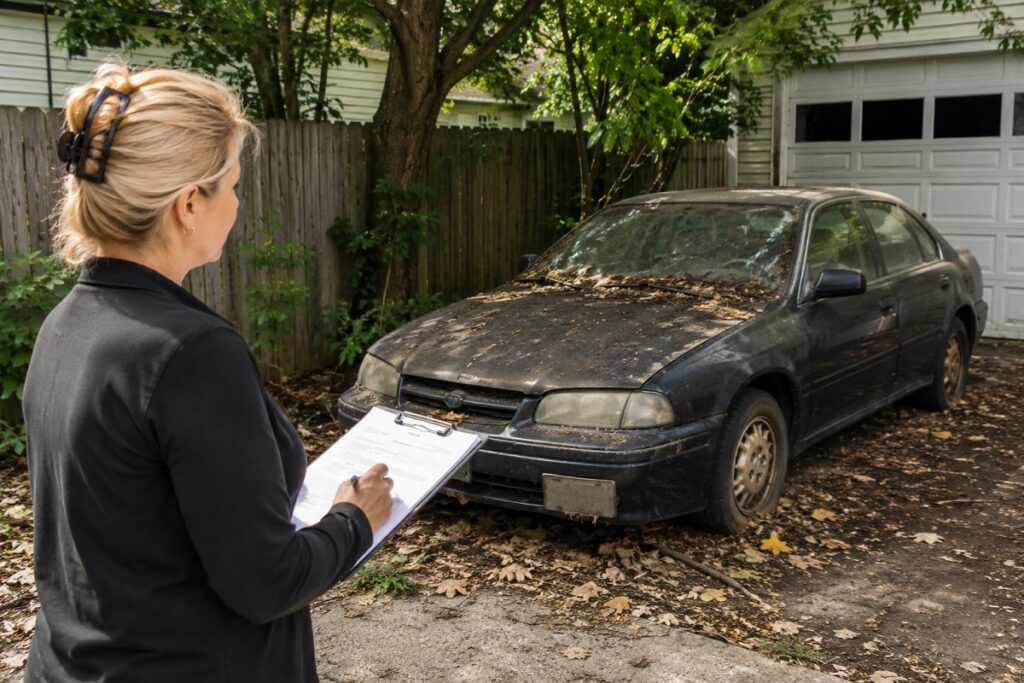
Before taking any action, it is important to establish that the vehicle meets your state’s definition of an abandoned vehicle. Laws vary by location, and the amount of time a vehicle must remain unattended before being classified as abandoned differs from state to state.
Common factors that may qualify a vehicle as abandoned include:
- The vehicle has remained on private property without permission for an extended period.
- The owner cannot be located or contacted.
- Registration has expired.
- The vehicle appears inoperable or neglected.
- The owner has ignored requests to remove the vehicle.
Since abandoned vehicle laws vary significantly, checking with your local Department of Motor Vehicles (DMV) or local law enforcement agency is an essential first step.
Verify Ownership and Vehicle Information
Selling an abandoned car without confirming ownership can create serious legal complications. Before moving forward, gather as much information about the vehicle as possible.
Important details include:
- Vehicle Identification Number (VIN)
- License plate number
- Make and model
- Vehicle color
- Current registration status
Law enforcement agencies or the DMV may be able to help identify the registered owner through the VIN or license plate number. This information is often necessary before beginning the abandoned vehicle title process.
Notify the Registered Owner
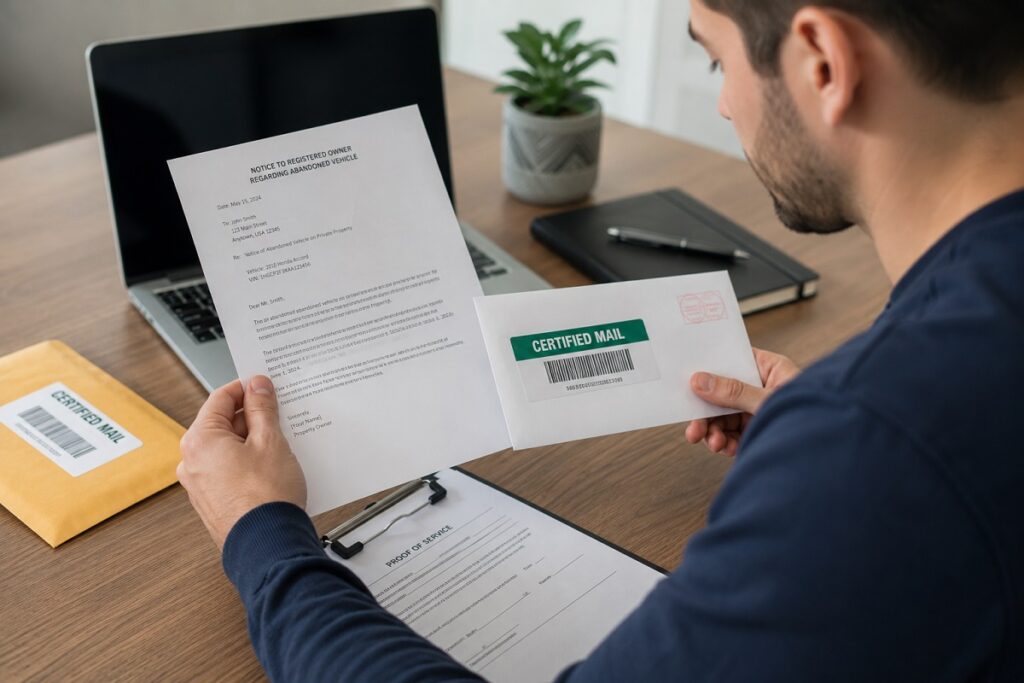
Most states require property owners to make reasonable efforts to contact the registered owner before obtaining ownership rights or selling the vehicle.
Notification requirements often include:
- Sending a certified letter to the owner’s last known address
- Providing a deadline for vehicle removal
- Informing the owner of possible towing or sale
- Documenting all communication attempts
Keep copies of all correspondence, receipts, and notices. These records may be required later if the sale is challenged or if government agencies request proof of compliance.
Contact Local Authorities
Local authorities often play an important role in abandoned vehicle cases. Depending on your location, you may need to notify:
- Local police departments
- Sheriff’s offices
- Parking enforcement agencies
- State DMV offices
Authorities can verify whether the vehicle has been reported stolen and explain the legal process required in your area.
In some jurisdictions, a police report may be necessary before any ownership transfer can occur.
Understand Your State’s Abandoned Vehicle Laws
Every state has unique regulations governing abandoned vehicles. Some states allow private property owners to pursue ownership after following specific procedures, while others require involvement from licensed towing companies.
Areas commonly covered by abandoned vehicle laws include:
Waiting Period Requirements
Many states require a waiting period before a vehicle can be considered abandoned. This period may range from several days to several months.
Notification Procedures
States often require written notice to be sent to registered owners, lienholders, and other interested parties.
Public Auction Rules
Certain states require abandoned vehicles to be sold through public auction rather than private sale.
Title Acquisition Requirements
Many jurisdictions require property owners to obtain an abandoned vehicle title before selling the vehicle legally.
Because these requirements differ significantly, researching local regulations is critical.
Arrange for Vehicle Towing if Necessary
If the vehicle is blocking access, creating safety concerns, or violating local ordinances, towing may be appropriate.
When arranging towing:
- Use a licensed towing company.
- Request written documentation.
- Confirm compliance with local laws.
- Keep detailed records of all costs.
In some states, towing companies can initiate the abandoned vehicle process on your behalf, simplifying the ownership transfer procedure.
Obtain an Abandoned Vehicle Title
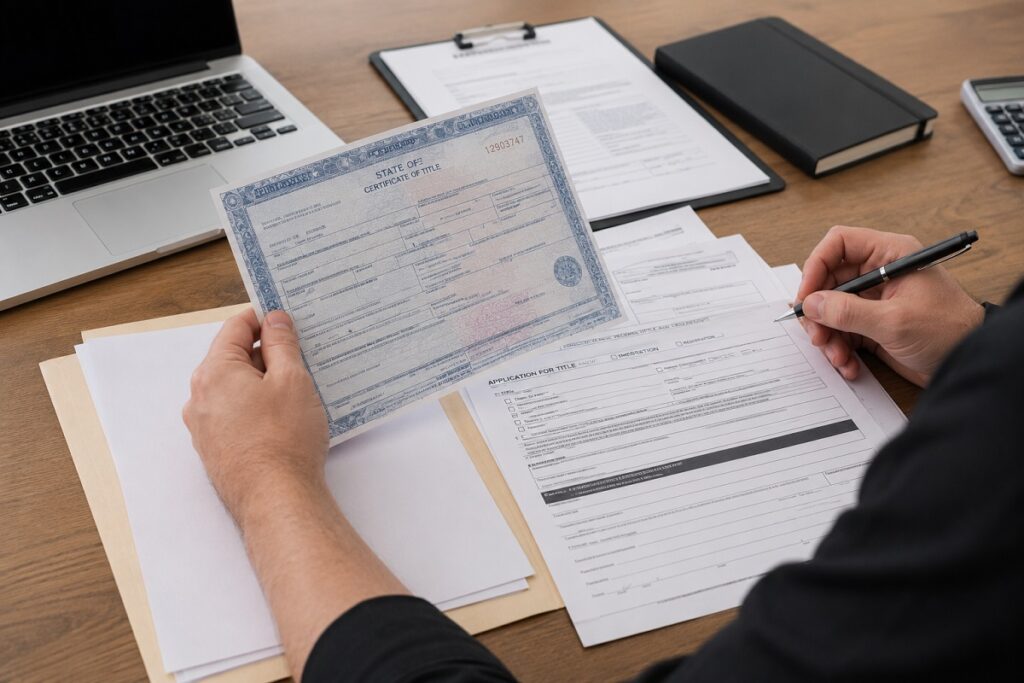
One of the most important steps in selling an abandoned vehicle is obtaining legal ownership.
The process typically involves:
- Filing the required paperwork.
- Providing proof that the vehicle was abandoned.
- Showing evidence of owner notification.
- Waiting for the legally required response period.
- Receiving approval from the DMV or appropriate agency.
Without proper title documentation, selling the vehicle can be difficult or impossible.
Documents Commonly Required
Depending on your state, you may need:
- Property ownership records
- Vehicle information
- Photographs of the vehicle
- Certified mail receipts
- Police reports
- Towing records
- Abandoned vehicle claim forms
Having complete documentation can significantly speed up the process.
Check for Existing Liens
Before selling an abandoned vehicle, determine whether there are any liens attached to it.
A lienholder may have a legal claim to the vehicle that takes priority over your ownership claim.
Potential lienholders include:
- Banks
- Credit unions
- Auto finance companies
- Leasing companies
If a lien exists, additional steps may be required before ownership can be transferred.
Assess the Vehicle’s Value
Once legal ownership has been established, evaluate the vehicle’s market value before listing it for sale.
Factors affecting value include:
- Vehicle condition
- Mileage
- Age
- Make and model
- Mechanical issues
- Market demand
You may want to obtain estimates from local dealerships, auto appraisers, or online valuation tools.
A realistic valuation helps attract buyers and supports a faster sale.
Decide Whether to Repair or Sell As-Is
Many abandoned vehicles require some level of maintenance or repair.
Before investing money, compare:
Benefits of Repairing
- Higher selling price
- Larger buyer pool
- Improved appearance
- Better negotiating position
Benefits of Selling As-Is
- Faster transaction
- Lower upfront costs
- Reduced investment risk
- Simpler sales process
The right option depends on the vehicle’s condition and estimated repair expenses.
Choose the Best Selling Method
Several options are available once you legally own the vehicle.
Private Sale
A private sale often generates the highest return.
Advantages include:
- Greater control over pricing
- Direct negotiations with buyers
- Potentially higher profits
Auto Dealer Sale
Selling to a dealership provides convenience and speed.
Benefits include:
- Quick transaction
- Less paperwork
- Immediate payment
Auction
Some abandoned vehicles sell effectively through auctions.
Auctions may be especially useful for:
- Older vehicles
- Salvage vehicles
- Vehicles with uncertain market demand
Junk Car Buyers
If the vehicle has extensive damage, selling to a junk car buyer may be the most practical solution.
Many companies purchase vehicles regardless of condition.
Prepare the Vehicle for Sale
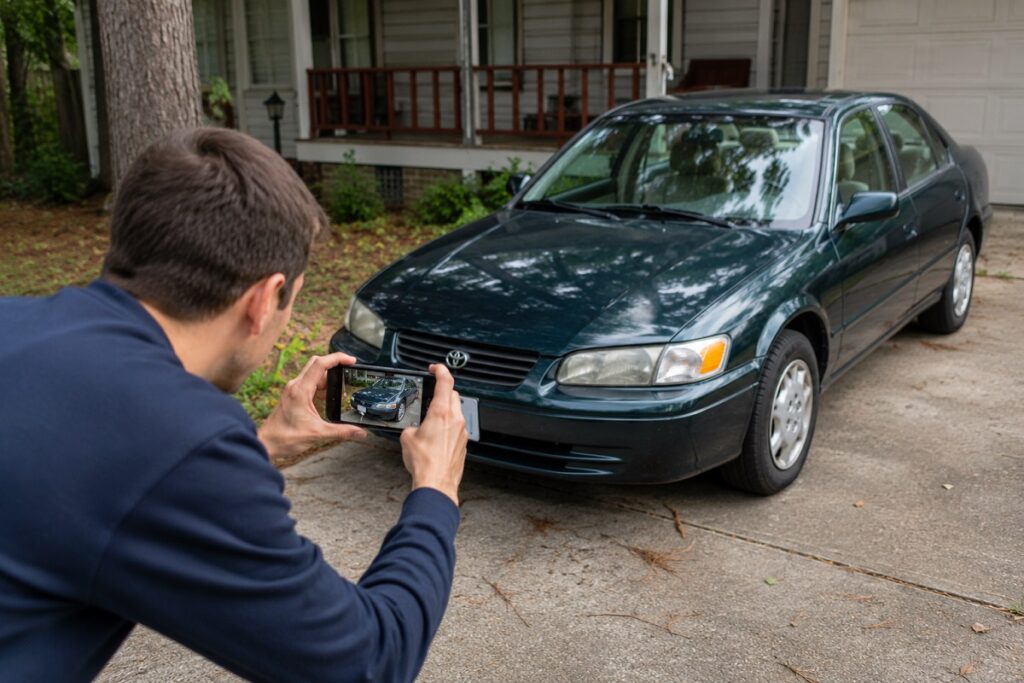
Presentation can significantly impact selling price.
Before listing the vehicle:
- Wash and clean the exterior.
- Remove debris from the interior.
- Gather title and ownership documents.
- Photograph the vehicle from multiple angles.
- Disclose known issues honestly.
Good preparation increases buyer confidence and helps support your asking price.
Create an Effective Vehicle Listing
A detailed listing can attract serious buyers and reduce unnecessary inquiries.
Include:
- Year, make, and model
- Mileage
- Vehicle condition
- Ownership status
- Title information
- Asking price
- Recent repairs or upgrades
Clear photos and accurate descriptions improve credibility and increase buyer interest.
Complete the Sale Legally
Once you find a buyer, complete all required paperwork according to your state’s regulations.
Common requirements include:
- Signing over the title
- Completing a bill of sale
- Reporting the sale to the DMV
- Providing odometer disclosures if required
- Removing license plates when applicable
Keeping copies of all documents protects both buyer and seller.
Avoid Common Mistakes
Property owners often encounter problems when attempting to sell an abandoned vehicle.
Common mistakes include:
- Selling the vehicle without obtaining legal ownership
- Ignoring notification requirements
- Failing to check for liens
- Skipping title transfer procedures
- Disposing of the vehicle too quickly
- Inadequate record keeping
Avoiding these mistakes can prevent legal disputes and financial losses.
When Professional Assistance May Help
In complex situations, professional guidance may be beneficial.
Consider seeking assistance from:
- Attorneys familiar with vehicle ownership laws
- DMV representatives
- Licensed towing companies
- Auto title services
Professional support can be particularly useful when ownership records are unclear or multiple parties claim an interest in the vehicle.
Selling a car that was abandoned on your property requires patience, documentation, and compliance with local laws. By following the proper abandoned vehicle procedures, obtaining legal ownership, resolving title issues, and maintaining accurate records, property owners can legally transfer ownership and sell the vehicle with confidence while minimizing the risk of future disputes.
Content reviewed and published by Sell My Car Colorado Editorial Team.